Learning is a daily activity, whether you realize it or not. You learn when you read an article, watch a video, listen to a lecture, or try something new. But not all learning methods are equally effective. Some help you remember and apply knowledge, while others only give you a temporary sense of understanding.
This is where the difference between active learning and passive learning becomes important.
Many people spend hours consuming information but still struggle to apply what they learn. They feel productive, but the results are limited. The reason is simple. They rely too much on passive learning and not enough on active engagement.
Understanding how these two approaches work can completely change the way you learn, retain information, and build real skills.
Understanding Active and Passive Learning
Before comparing them, it is important to clearly understand what each type means.
What is Passive Learning
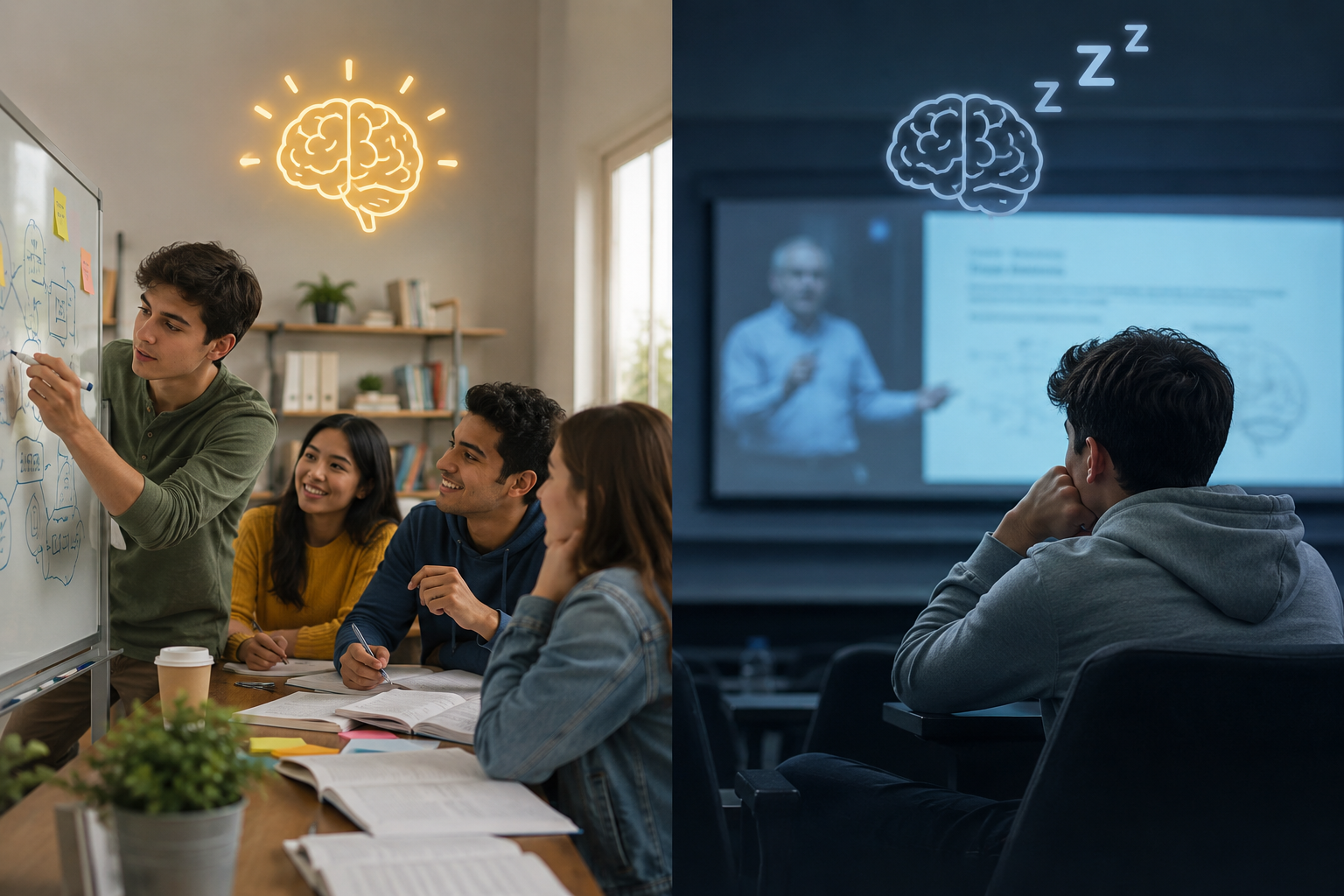
Passive learning happens when you receive information without actively engaging with it.
Common examples include:
- Watching videos
- Listening to lectures
- Reading articles without reflection
- Scrolling through educational content
In this method, your role is mostly to absorb information. You are not required to think deeply, question ideas, or apply knowledge.
What is Active Learning
Active learning involves interacting with the information instead of just consuming it.
Common examples include:
- Taking notes in your own words
- Practicing what you learn
- Asking questions
- Teaching others
- Solving problems
In this method, your brain is actively working. You are processing, analyzing, and applying information.
The Core Difference That Matters
The main difference between active and passive learning is not the activity itself but the level of engagement.
Passive learning gives you exposure to information. Active learning builds understanding and retention.
You may watch a tutorial and feel like you understand everything. But unless you apply it, your brain does not fully process the information.
This is why many people feel stuck even after consuming large amounts of content.
Why Passive Learning Feels Easier
Passive learning is comfortable. It requires less effort and feels smooth.
Reasons people prefer it
- It is easy to start
- It does not require deep thinking
- It feels productive
- It gives quick satisfaction
However, this comfort comes at a cost.
The hidden problem
Passive learning creates an illusion of learning. You feel like you understand something, but when you try to use it, you struggle.
This is one of the biggest reasons why many learning routines fail over time.
If you have faced this issue, you may relate to patterns explained in Why Most Self Improvement Routines Fail (Real Reasons Explained), where lack of practical application leads to inconsistency.
Why Active Learning Is More Effective
Active learning requires effort, but it produces stronger results.
Key advantages
- Improves understanding
- Increases retention
- Builds practical skills
- Strengthens problem-solving ability
When you actively engage with information, your brain forms stronger connections. This makes it easier to recall and apply what you learn.
Real Example of Passive vs Active Learning
To understand the difference clearly, consider this situation.
Passive approach
You watch a video about improving typing speed. You understand the tips and feel confident.
Active approach
You watch the same video, then:
- Practice typing exercises
- Track your speed daily
- Identify mistakes
- Improve gradually
The second approach leads to real improvement.
You can apply this method using strategies from How to Improved Typing Speed Using Free Online Tools, where practice and tracking are combined.
When Passive Learning Is Still Useful
Passive learning is not useless. It has an important role when used correctly.
Best situations for passive learning
- Getting introduced to a new topic
- Understanding basic concepts
- Exploring ideas quickly
It works well as a starting point.
However, it should not be your only method.
How to Convert Passive Learning Into Active Learning
One of the best strategies is to transform passive learning into active engagement.
Simple ways to do this
- Pause and summarize what you learned
- Write notes in your own words
- Ask questions about the topic
- Apply the information immediately
- Teach someone else
Even small actions can make a big difference.
The Role of Consistency in Learning
Learning is not about doing one session perfectly. It is about consistent effort over time.
Active learning helps you stay consistent because it produces visible results.
You can build a structured learning habit by following systems like The Learning Routine That Helped Me Study Consistently.
Consistency combined with active engagement leads to long-term success.
Common Mistakes People Make
Many learners unknowingly reduce their effectiveness by making simple mistakes.
Relying only on content consumption
Watching and reading without applying information limits progress.
Avoiding difficult tasks
Active learning requires effort, so people avoid it and choose easier methods.
Not reviewing information
Without revision, even actively learned information can fade.
Lack of focus
Distractions reduce the quality of learning.
You can improve focus by applying strategies from How I Reduced Digital Distractions and Reclaimed My Focus.
Which One Works Better
Active learning is clearly more effective for long-term results.
However, the best approach is not choosing one over the other. It is combining both.
Ideal learning approach
- Start with passive learning to understand the basics
- Move to active learning to apply knowledge
- Repeat the cycle consistently
This balanced approach helps you learn faster and retain information longer.
Practical Learning Strategy You Can Use Daily
To make this more actionable, here is a simple structure you can follow.
Step one: Learn
Read or watch content to understand the topic.
Step two: Process
Write key points in your own words.
Step three: Apply
Practice what you learned immediately.
Step four: Review
Check your progress and improve.
You can also track your improvement using systems like How I Track My Learning Progress Using Simple Tools.
Final Thoughts
Active learning and passive learning both have their place, but they are not equal in results.
Passive learning helps you get started, but active learning helps you improve.
If you only consume information, you may feel productive but see little progress. If you actively engage with what you learn, you build real skills and lasting understanding.
The difference is not in how much you learn, but in how deeply you engage with it.
Start small. Take one concept and apply it. Ask questions. Practice regularly.
Over time, this approach will transform the way you learn and help you achieve better results with less wasted effort.
Frequently Asked Questions
What is the difference between active and passive learning?
Active learning involves engaging with information, while passive learning involves simply receiving it.
Which is better for long-term learning?
Active learning is better because it improves understanding and retention.
Can passive learning be useful?
Yes, it is useful for understanding basic concepts and getting started.
How can I make my learning more active?
You can take notes, ask questions, and apply what you learn immediately.
Is active learning more difficult?
Yes, it requires more effort, but it produces better results.

Abdur Rahman is a writer and digital learning enthusiast focused on critical thinking, self-improvement, productivity, and practical online learning strategies. He shares experience-based articles that help readers build useful habits, improve digital skills, evaluate information more effectively, and develop smarter learning systems for everyday life. Through Knowledge Source Hub, his goal is to make learning simpler, more practical, and accessible for everyone.